UK Graduate Visa Cut to 18 Months From 2027: What International Students Need to Know
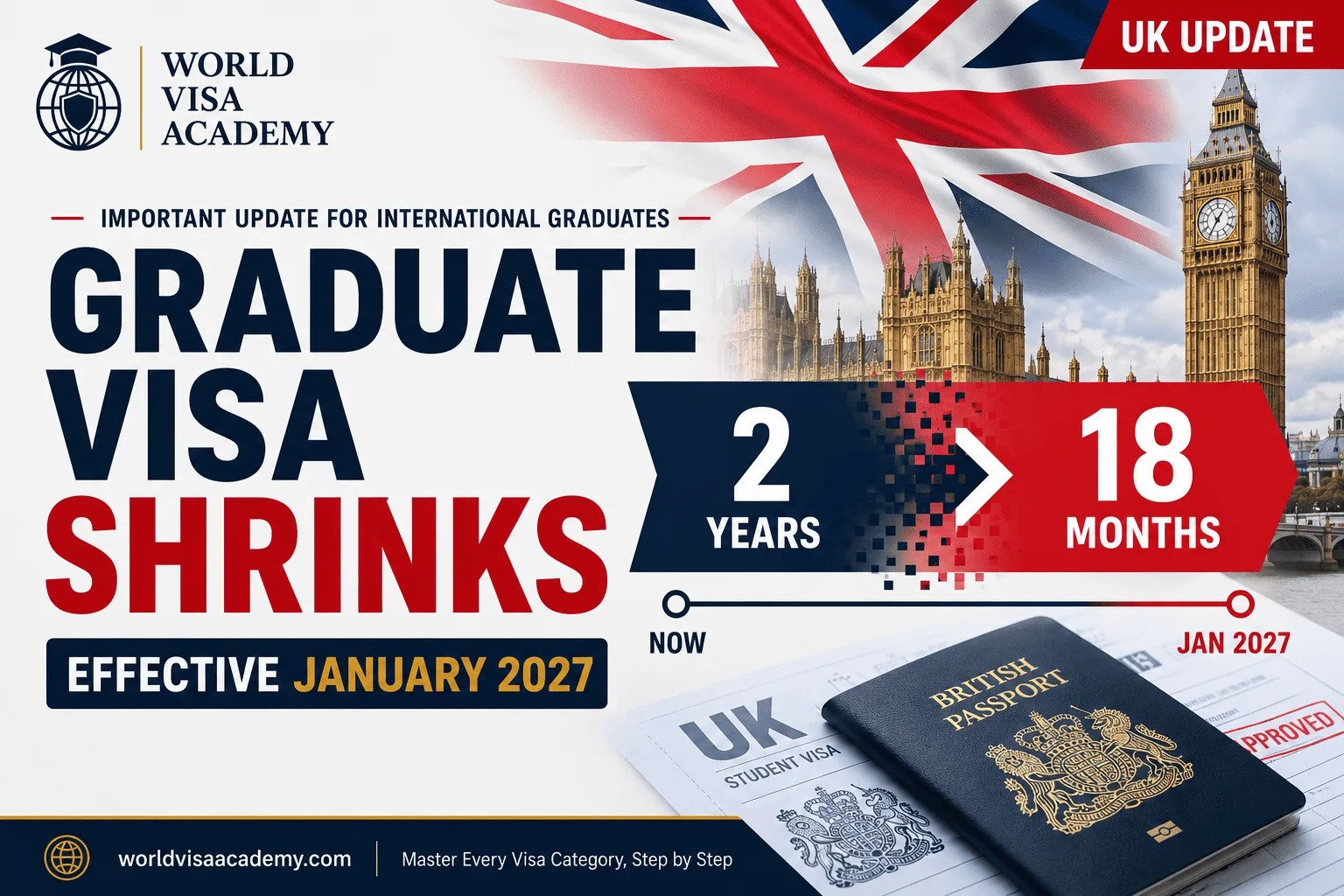

If you are planning to study in the UK, or you already are, there is a change coming that you need to plan around now, not later. The Graduate visa, the route that lets international students stay and work in the UK after finishing their degree, is being cut from 2 years down to 18 months.
This is not a rumour and it is not still under debate. The UK government confirmed it through an official Statement of Changes to the Immigration Rules in October 2025, and it takes effect from January 1, 2027. Here is exactly what is changing, why, and what you should be doing right now if this affects you.
What Is Actually Changing
The Graduate visa, sometimes called the Post Study Work visa, currently lets most bachelor's and master's graduates stay in the UK for 2 years after finishing their course, without needing a job offer or a sponsor. PhD graduates get 3 years.
From January 1, 2027, that 2 year period drops to 18 months for bachelor's and master's graduates. PhD graduates are not affected and will continue to get 3 years.
The important detail most students miss is this. It is not your graduation date that matters. It is the date you apply for the Graduate visa. If you apply on or before December 31, 2026, you still get the full 2 years, even if your course finished months earlier. If you apply on or after January 1, 2027, you get 18 months, even if you feel like you just barely missed the deadline.
How We Got Here
Between now and then, current rules stay exactly as they are.
Who This Actually Affects
This is where a lot of confusion happens, so here is a simple breakdown.
| Situation | What You Get |
|---|---|
| You apply for your Graduate visa on or before December 31, 2026 | Full 2 years (or 3 years for PhD) |
| You apply on or after January 1, 2027 | 18 months (PhD graduates still get 3 years) |
| You already hold a Graduate visa | Not affected, your existing visa length stays the same |
| You are starting a 1 year master's in September or October 2026 | You will likely graduate and apply in late 2027, which puts you under the new 18 month rule |
| You are starting a 2 or 3 year undergraduate degree in 2026 | You will graduate in 2028 or 2029, squarely inside the new rule |
If you are currently studying and due to finish your course before the end of 2026, this is genuinely good news for you. You still have a real chance at the full 2 years, as long as you apply in time.
[INTERNAL LINK: WVA guide to UK student visa timelines]
Why Is the UK Doing This
The government has said the goal is to push graduates toward skilled, sponsored employment faster, rather than spending a long stretch of time in the UK without moving into a graduate level job. Home Office data has shown that a meaningful share of Graduate visa holders were not transitioning into skilled roles within the original 2 year window.
This sits inside a much bigger picture. The May 2025 white paper was built around reducing overall net migration to the UK, and the Graduate route reduction is one piece of a wider set of changes that also includes higher English language requirements for several visa categories and tighter rules around settlement.
Universities and education bodies have pushed back, warning that a shorter post study window could make the UK less attractive next to countries like Canada or Australia, which currently offer longer post study work periods. That tension, between migration control and staying competitive for international students, is really the story behind this whole policy.
What a Graduate Visa Actually Costs in 2026
Cost is often the part students plan for last, so here is the current picture based on 2026 fee rates.
| Visa Length | Application Fee | Health Surcharge | Total Cost |
|---|---|---|---|
| 2 years (apply by Dec 31, 2026) | £937 | £2,070 | About £3,007 |
| 18 months (apply from Jan 1, 2027) | £937 | About £1,552 | About £2,489 |
| 3 years (PhD graduates) | £937 | £3,105 | About £4,042 |
A few things worth knowing about these numbers. The health surcharge, officially called the Immigration Health Surcharge, is charged per year of your visa, at £1,035 a year for most Graduate visa applicants. It is paid upfront, in full, before your visa is approved. Each dependant on your visa pays their own application fee and their own surcharge for the same length of time.
Interestingly, the shorter 18 month visa actually costs less overall than the current 2 year one, since you are paying the surcharge for less time. The real cost is not money, it is the shorter runway to find sponsored work.
Step by Step: How to Apply for the Graduate Visa
Should You Rush to Apply Before the Deadline
If your course finishes anytime in 2026, it is worth checking whether applying before December 31, 2026 is realistic for you. Use this checklist to think it through.
To be clear, this is not about panicking or applying before you are actually eligible. It is about knowing your dates and not missing a deadline by accident.
The Graduate Route Was Never the Final Step
It is worth remembering that the Graduate visa was never meant to be a long term solution. It does not lead to settlement on its own, and it cannot be extended. The real long term route for most graduates is switching into the Skilled Worker visa once they secure a job with a licensed sponsor.
Under current Skilled Worker rules, most roles require a minimum salary of around £41,700, along with a valid sponsor and Certificate of Sponsorship, though some graduate level roles qualify for a lower new entrant threshold. With an 18 month Graduate visa instead of 2 years, the practical window to find that sponsor and make the switch gets noticeably tighter, especially once you account for job hunting, interviews, and onboarding time.
[INTERNAL LINK: WVA guide to switching from Graduate visa to Skilled Worker visa]
Other UK Changes Worth Knowing About
The Graduate visa reduction is not happening in isolation. A few other changes are worth having on your radar if you are planning UK study.
None of these change the core Graduate visa story, but they are part of the same broader direction, tighter rules, higher standards, and less room for delay.
For students and families in India weighing up UK study right now, this is exactly the kind of shifting landscape where getting proper guidance matters. At World Visa Academy, our UK study and post study training modules are kept current with exactly these kinds of Home Office changes, so consultants can advise students accurately instead of relying on outdated timelines.
Whatever you decide, the one thing worth acting on today is your own timeline. Know your course completion date, know your visa expiry date, and know exactly where December 31, 2026 falls in relation to both.
UK immigration rules are shifting fast, and students need advisors who know exactly what changed and when. Build that expertise through WVA's IAF accredited UK visa consultant training.
Explore WVA CoursesThe change applies to any Graduate visa application submitted on or after January 1, 2027. If you apply on or before December 31, 2026, you still receive the full 2 years, regardless of when your course actually finished. PhD and doctoral graduates are not affected and continue to receive 3 years either way.
It depends on when you apply, not when you start your course. Most 1 year master's students starting in September or October 2026 will complete their course and apply for their Graduate visa in late 2027, which falls after the January 1, 2027 cutoff. That means you would likely receive 18 months rather than 2 years, unless your course and application timeline allow you to apply before the end of 2026.
No. If you already hold a Graduate visa, your current visa length stays exactly as it was granted. The 18 month rule only applies to new Graduate visa applications submitted on or after January 1, 2027. Existing visa holders are not affected retroactively.
As of 2026 rates, the application fee is £937, plus an Immigration Health Surcharge of £1,035 per year of your visa. A full 2 year Graduate visa costs about £3,007 in total. An 18 month visa, once the new rule applies, would cost around £2,489, since the health surcharge is calculated based on the shorter visa length.
The Graduate visa cannot be extended, so most graduates need to switch into another route to stay in the UK legally, most commonly the Skilled Worker visa. This requires securing a job offer from a Home Office licensed sponsor and meeting the relevant salary threshold, which is around £41,700 for most roles in 2026. With an 18 month Graduate visa instead of 2 years, starting your job search and sponsor conversations early becomes even more important.









0 Comments
Be the first to comment.