Course Includes:
- Full lifetime access
- Access on any device
- Certificate of Completion



Estonia’s e-Residency provides a government-issued digital identity that gives non-residents access to Estonian digital services and enables entrepreneurs to establish and manage an Estonian company remotely. It is not a visa, residence permit or right to enter Estonia. The Estonian Start-up Visa is a separate immigration pathway for qualifying non-EU founders with technology-based, innovative and scalable businesses and global growth potential. Eligible founders require approval from the Startup Committee before proceeding with the applicable visa or residence process. This training is designed for immigration consultants, business advisers, start-up consultants, visa professionals and caseworkers handling Estonia business immigration cases. Through World Visa Academy’s structured training, learners develop skills to distinguish e-Residency from immigration status, assess start-up eligibility, understand digital company formation, prepare founder documentation and manage the Start-up Visa pathway. The course does not guarantee e-Residency approval, Startup Committee approval, visa approval, business success or residence.
A structured path from fundamentals to real application
Understand e-Residency as a government-issued digital identity for non-residents. Learn its business uses, digital signatures, access to Estonian e-services and company management capabilities while clearly distinguishing e-Residency from citizenship, tax residency, physical residency and immigration permission.
Learn the practical e-Residency application journey and how the digital identity can be used to establish and manage an Estonian company remotely. Understand the role of legal-address and contact-person services, the Business Register and ongoing business administration.
Master the founder-focused Start-up Visa framework. Learn how to assess whether a business fits Estonia’s start-up definition, including technology-based innovation, scalability, global growth potential and the Startup Committee approval requirement. Distinguish qualifying start-ups from traditional businesses that may not meet the programme criteria.
Understand the Startup Committee assessment process, application information and verification code issued to qualifying founders. Learn how the approval interacts with visa or temporary residence procedures and why nationality and existing immigration status must be assessed before selecting the correct route.
Learn the distinction between entering Estonia, obtaining a long-stay visa and applying for a temporary residence permit for entrepreneurship. Understand the founder’s relationship with the Estonian company, business activity requirements and the immigration steps required when physical relocation is part of the plan.
The course covers two distinct Estonia pathways: e-Residency for digital business administration and the Start-up Visa for qualifying non-EU founders. World Visa Academy focuses on eligibility assessment, company formation, Startup Committee approval, immigration procedures, documentation and compliance so professionals can correctly distinguish business services from immigration status.
e-Residency is a government-issued digital identity that provides access to Estonian e-services and supports remote company management. It does not grant the right to enter, live or work in Estonia. The Start-up Visa is an immigration route for qualifying non-EU founders whose businesses meet Estonia’s start-up criteria and receive the required Startup Committee approval.
The programme is intended for technology-based, innovative and scalable businesses with global growth potential. The Startup Committee assesses whether the proposed business meets Estonia’s legal definition of a start-up. Traditional businesses such as ordinary restaurants or one-person consultancy models generally do not fit the intended start-up framework.
A founder first presents the business to the Startup Committee for assessment. If the start-up qualifies, the founder receives a verification letter and application code. The founder then determines the appropriate visa or residence route based on nationality and circumstances. An Estonian company is not mandatory merely to apply for the Start-up Visa, although company registration is relevant for a temporary residence permit for entrepreneurship.
The course is suitable for immigration consultants, business immigration advisers, start-up consultants, investment professionals and visa caseworkers. It is particularly useful for professionals handling entrepreneurs who want to establish an EU-based company remotely or potentially relocate to Estonia through the Start-up Visa framework, while keeping business registration and immigration requirements clearly separated.
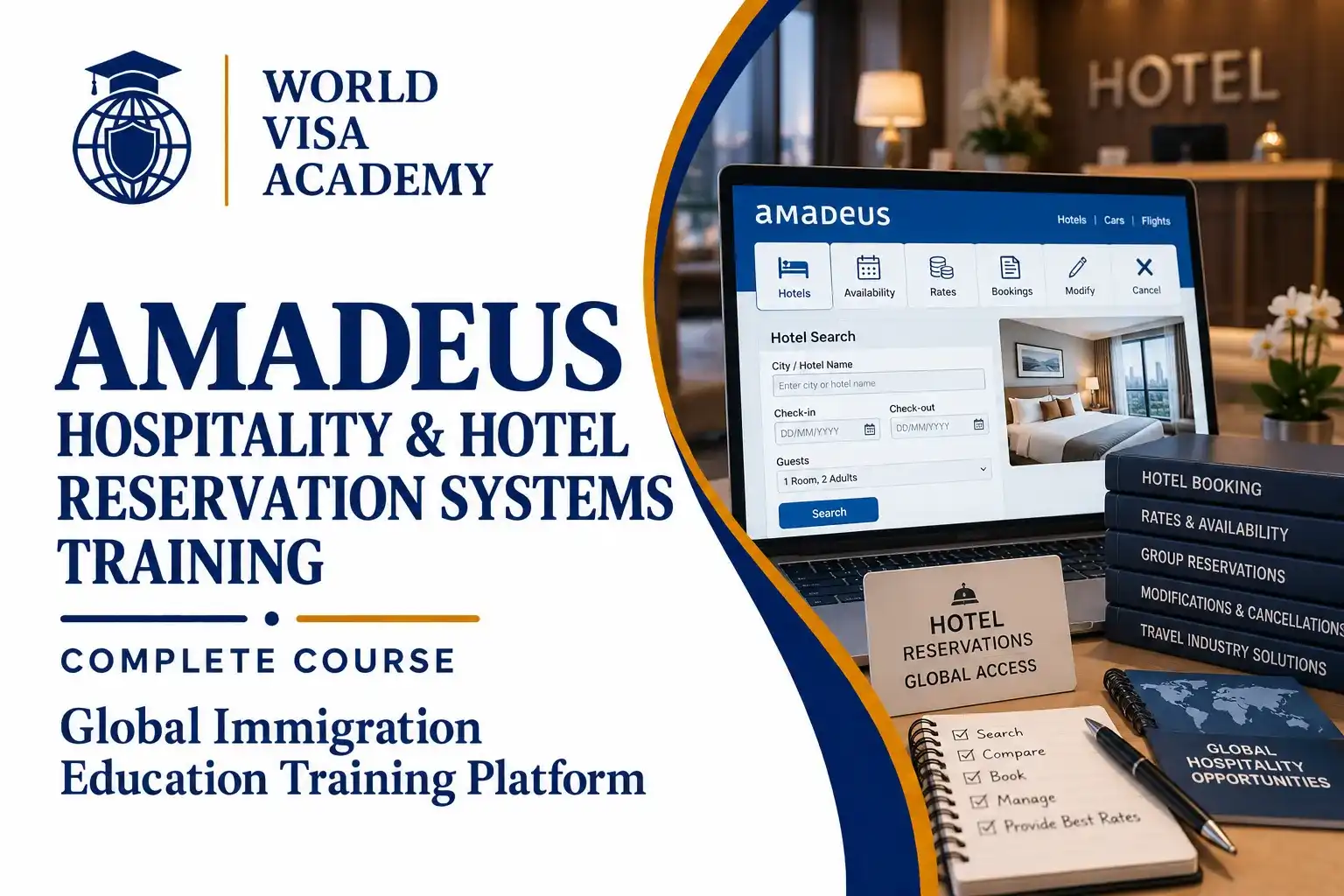
The Amadeus Hospitality & Hotel Reservation Systems Training Course provides practical professional knowledge for travel consultants, hotel reservation professionals and tourism ...

The Worldspan GDS Air Ticketing Training Course provides practical training in Global Distribution System concepts and air-ticketing workflows for travel ...

The Air Cargo & Freight Documentation Training Course provides practical professional knowledge for individuals working with air freight, cargo agencies, freight ...