Working Holiday Visas for Polish Citizens: Where Can You Go?
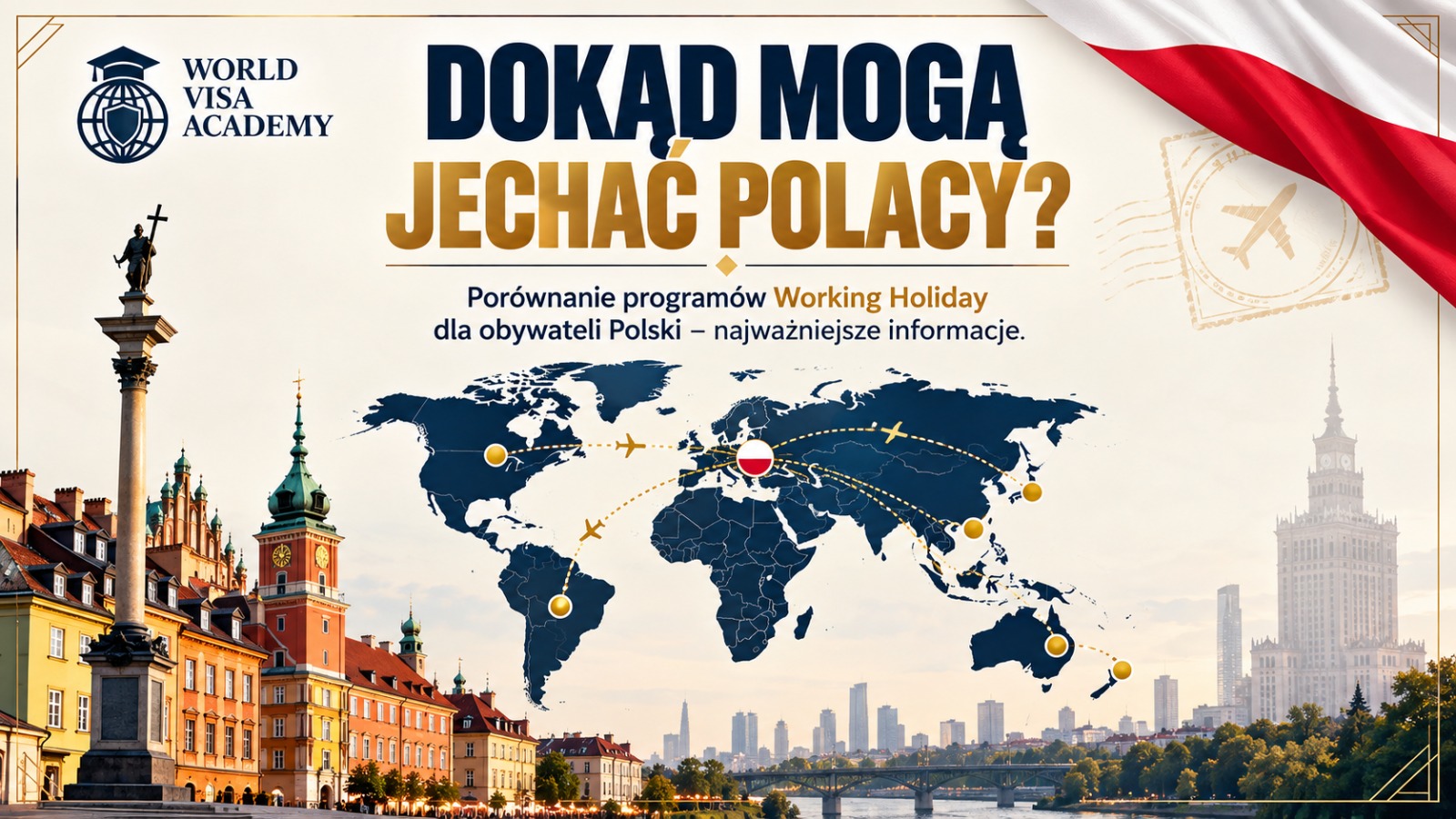

Before getting into the actual working holiday agreements, it's worth answering the question most people ask first. As a European Union citizen, a Pole doesn't need a working holiday visa to live and work anywhere else in the EU or the wider European Economic Area. Free movement already covers that, no visa, no age limit, no formal application process required.
That's exactly why every country on this list sits outside Europe. A working holiday visa only becomes relevant once you're looking beyond the EU, and this is where Poland has built a genuinely solid, if somewhat lesser known, network of bilateral agreements.
According to Poland's own Ministry of Family, Labour and Social Policy, the country currently has signed working holiday agreements with eight destinations: New Zealand, Australia, Japan, South Korea, Taiwan, Chile, Argentina and Peru. A ninth option, Canada, runs through a slightly different system but is also widely available to Polish citizens and worth including here.
Across most of these agreements, the general framework looks similar: participants aged 18 to 30 can spend up to a year in the partner country, combining genuine travel and cultural experience with the ability to work casually to help fund the trip. The specifics, exact age limits, visa costs, and application channels, do vary by country, so let's go through them properly.
New Zealand holds a special place in this list. Poland's very first working holiday agreement was signed with New Zealand back in 2008, coming into effect in 2010, making New Zealand what Poland's own government describes as the global pioneer of this type of bilateral arrangement. New Zealand itself now runs working holiday agreements with 45 countries worldwide, with Poland among them, and most participants apply between the ages of 18 and 30.
Poland's agreement with Australia was signed in March 2014, and it operates under what's specifically branded the "Visit and Work" Program on the Polish side. On the Australian side, this corresponds to the Work and Holiday visa, subclass 462, a distinct category from Australia's other working holiday visa, subclass 417, which is reserved for a different set of partner countries. Under subclass 462, Polish applicants aged 18 to 30 inclusive can work and travel in Australia for up to 12 months.
Japan currently runs working holiday arrangements with 32 countries and regions as of April 2026, with Poland firmly among them, alongside neighbours like Slovakia, Hungary and the Czech Republic. South Korea and Taiwan round out Poland's Asian partners, both offering the same general structure, a roughly 12 month window combining travel with the right to take on incidental work to support the trip. These three destinations give Polish travellers genuine access to some of Asia's most culturally distinct working holiday experiences, alongside more traditional partners like Australia and New Zealand.
Poland's South American agreements, with Chile, Argentina and Peru, are less commonly discussed than the Asia-Pacific options, but they open up a genuinely different kind of experience for Polish citizens interested in Latin America specifically. These agreements follow the same broad structure as the others, generally a 12 month working holiday window for applicants in their twenties, though exact requirements should always be confirmed directly with each country's consulate before applying, since bilateral terms can differ in the fine print.
Canada doesn't appear on Poland's own official bilateral agreement list in quite the same format as the others, but Polish citizens are commonly listed as eligible under Canada's International Experience Canada program, which functions as Canada's working holiday and youth mobility system. Notably, Canada tends to offer a higher upper age limit than most of Poland's other partners, commonly cited up to 35 rather than 30, making it a particularly attractive option for slightly older applicants who've aged out of eligibility elsewhere on this list. Given IEC operates through an annual pool and season specific rounds, applicants should check current quota openings directly through Canada's official immigration portal rather than assuming year round availability.
| Destination | Typical Age Range | Typical Duration | Notes |
|---|---|---|---|
| New Zealand | 18–30 | Up to 12 months | Poland's first working holiday partner, since 2010 |
| Australia | 18–30 | Up to 12 months | Runs under subclass 462, not 417 |
| Japan | 18–30 | Up to 12 months | One of 32 Japan working holiday partner countries |
| South Korea | 18–30 | Up to 12 months | Confirmed bilateral partner |
| Taiwan | 18–30 | Up to 12 months | Confirmed bilateral partner |
| Chile | 18–30 | Up to 12 months | Confirmed bilateral partner |
| Argentina | 18–30 | Up to 12 months | Confirmed bilateral partner |
| Peru | 18–30 | Up to 12 months | Confirmed bilateral partner |
| Canada | Up to 35 | Up to 12 months | Runs through International Experience Canada, pool based |
According to Poland's official guidance, Polish citizens applying for a working holiday visa should submit their application directly to the relevant embassy of the partner country, or through that country's official application website where available, rather than through a Polish government portal. Requirements generally include proof of sufficient funds to support the initial period of the stay, valid health insurance covering the full duration, a return ticket or evidence of onward travel, and a clean immigration history with that specific country.
Since each bilateral agreement carries its own specific conditions, the safest approach is always to confirm current requirements directly with the destination country's embassy or consulate in Poland before beginning an application, rather than relying solely on general summaries.
Poland's working holiday network may be smaller than what's available to citizens of Australia, Canada or the UK, but eight solid bilateral partners, plus Canada's separate system, still opens a genuinely wide range of experiences, from New Zealand's pioneering original agreement to newer options across Asia and South America. For anyone advising Polish clients on international travel and work options, understanding exactly which agreements exist, and which ones don't, is the difference between pointing someone toward a real, workable pathway and sending them chasing a visa that was never actually available to them.
World Visa Academy's global visa consultant training covers working holiday agreements, bilateral visa categories, and application standards used by professionals worldwide.
Explore WVA CoursesAccording to Poland's Ministry of Family, Labour and Social Policy, Poland has signed working holiday agreements with New Zealand, Australia, Japan, South Korea, Taiwan, Chile, Argentina and Peru. Canada is also widely available to Polish citizens, though it operates through its separate International Experience Canada system.
No. As an EU citizen, a Pole has automatic freedom of movement rights to live and work in any other EU or European Economic Area country without needing a visa. Working holiday visas only become relevant for destinations outside the EU and EEA.
Most of Poland's bilateral agreements are open to applicants between 18 and 30 years old. Canada is the notable exception, commonly offering eligibility up to age 35 through its International Experience Canada programme.
Poland's agreement with Australia falls under the Work and Holiday visa, subclass 462, a separate category from Australia's subclass 417 working holiday visa, which is reserved for a different set of partner countries. Both allow similar work and travel rights, but they are administered as distinct visa subclasses.
Most of Poland's working holiday agreements allow a stay of up to 12 months, combining travel with the right to take on casual or incidental work to help fund the trip. Exact conditions can vary by destination, so applicants should confirm current terms directly with the relevant embassy before applying.








Would you like to read this article in Polish?
0 Comments
Be the first to comment.