US Supreme Court Confirms Birthright Citizenship Stays Forever: What It Means for Indian Families on Work, Study, and Visitor Visas
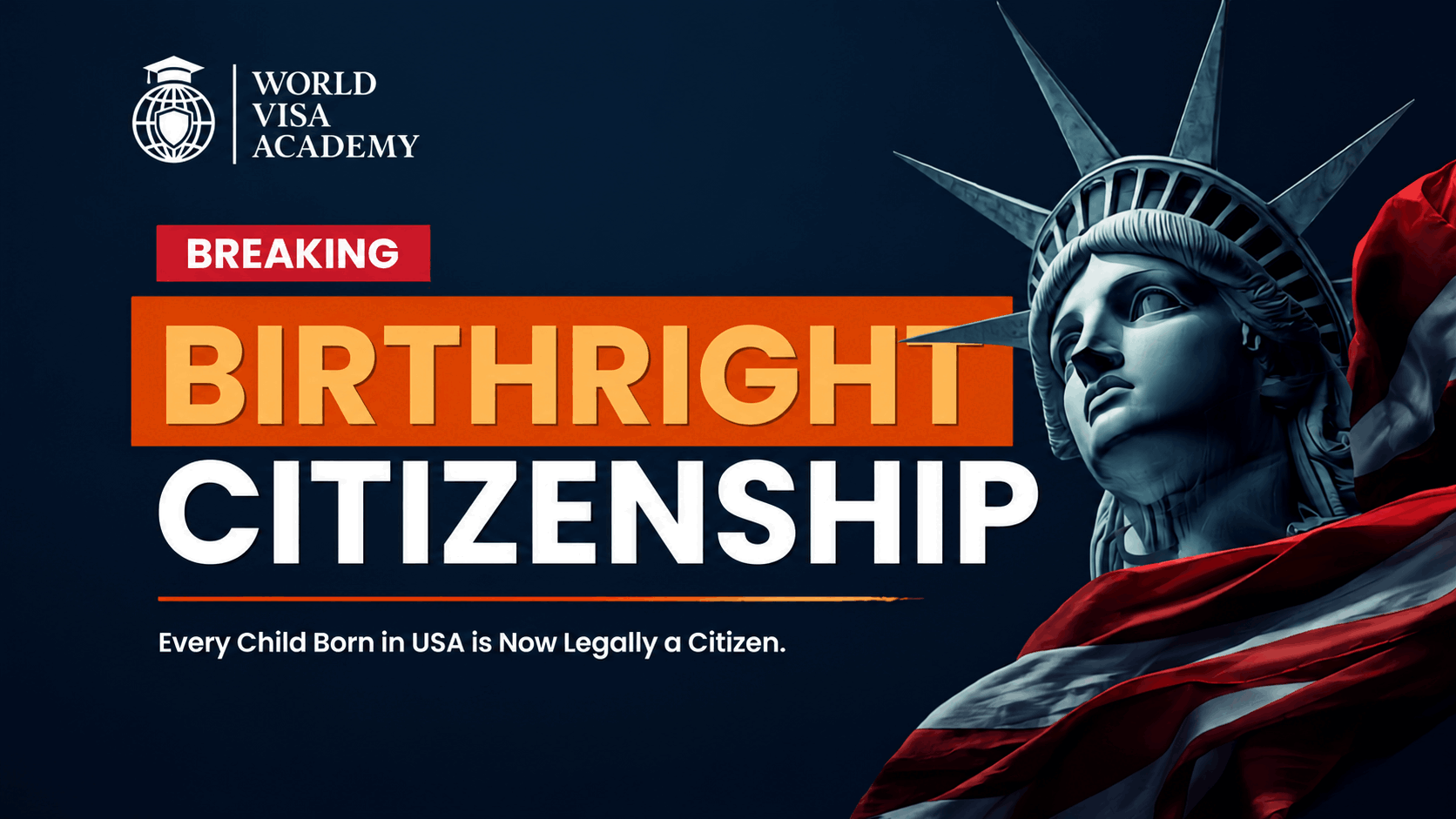
On Tuesday, June 30, 2026, the United States Supreme Court delivered one of the biggest immigration decisions in decades. In a case called Trump v. Barbara, the Court ruled 6 to 3 that every child born on American soil is automatically a US citizen, no matter what visa or immigration status the parents hold. This includes parents who are undocumented, and parents who are on temporary visas like H1B, F1, L1, or a simple tourist visa (B1/B2).
Chief Justice John Roberts wrote the main opinion for the majority.
If you are an immigration consultant, a student, a working professional, or a family planning a trip or a long stay in the US, this ruling directly affects you. Below, we break it down in simple language with real examples so you understand exactly what changed, what did not change, and what to tell your clients.
This was not a small technical ruling. It was the Supreme Court striking down an executive order that President Trump signed on his very first day back in office, on January 20, 2025. That order, called Executive Order 14160, tried to say that a child born in the US would only get automatic citizenship if at least one parent was already a US citizen or a green card holder.
The moment that order was signed, it was challenged in court. Lower courts across the country blocked it from ever taking effect while the case worked its way up. The Supreme Court has now confirmed that those lower courts were right, and the order is unconstitutional.
The Fourteenth Amendment to the US Constitution says that anyone born in the United States and subject to its laws is a citizen at birth. This rule has been in place since 1868, more than 150 years.
The Court leaned heavily on a famous 1898 case called United States v. Wong Kim Ark. In that case, a man named Wong Kim Ark was born in San Francisco to parents who were Chinese immigrants. When he tried to re enter the US after a trip abroad, immigration officials denied him entry, claiming he was not a citizen because of his parents' status. The Supreme Court disagreed. It ruled that his birth on US soil made him American, regardless of what his parents' immigration status was.
That same reasoning was applied again this week, 128 years later. Chief Justice Roberts wrote that a child born on American soil and subject to American law is made an American citizen, and that this understanding has been consistently followed ever since Wong Kim Ark.
If a baby is born on US ground, that baby is American. Full stop.
It does not matter if the parents came on a work visa, a student visa, a tourist visa, or crossed the border without any papers at all. Citizenship is tied to the place of birth, not the parents' visa category.
Think of a couple from Gujarat on an H1B work visa, living in Texas. If they have a baby in a Texas hospital, that baby is a US citizen from the moment of birth. There is no waiting period, no extra form, and no domicile test.
The same rule applies to:
In every one of these cases, the child born on US soil is a US citizen at birth, exactly as it has always been.
To be clear, the ruling does keep a small number of long standing exceptions in place. These are not new, they have existed for over a century:
Outside of these narrow and rare categories, birthright citizenship applies to everyone born on US soil.
Around 255,000 babies are born every year in the US to non citizen parents. This ruling protects the citizenship status of every one of these children completely.
Families no longer need to worry about their child being denied a US passport, a social security number, or admission into school. A US birth certificate remains valid proof of citizenship, exactly as it always has been for the last century and more.
For families already planning trips, studies, or work assignments in the US, this removes a major source of anxiety that had been hanging over the community since early 2025. Many families had delayed international travel, and some had even delayed having children, purely because of the uncertainty created by the executive order. That uncertainty is now gone.
This is genuinely good news to share with clients. If you are counselling families heading to the US on work visas, study visas, or even short visit visas, you can now confidently confirm that a child born there during their stay will be a citizen, with no extra steps required.
There is no new form to file, no new process to follow, and no domicile test that families need to pass. The rule stands exactly as it always has for the last 128 years.
It is worth noting the vote was 6 to 3, not unanimous, so this remains a topic of political debate within the United States. Justice Clarence Thomas, joined by Justice Neil Gorsuch, wrote a strong dissent disagreeing with the majority's historical reasoning. Justice Brett Kavanaugh agreed with the final outcome but arrived at it through a different legal path, based on federal statute rather than the Constitution itself.
As a consultant, your job is to present the facts of the ruling clearly and accurately to clients, without getting pulled into the political debate surrounding it.
When a client asks about having a baby in the US while on a work visa, a student visa, or even a short visit, you can now confirm with full confidence that the child will be a US citizen at birth, backed by this fresh Supreme Court ruling dated June 30, 2026.
Use this as a trust building moment. Clients remember consultants who bring them clear, accurate, and timely legal updates, especially on a topic as emotionally significant as their child's citizenship.
| Question | Answer |
|---|---|
| What did the Court decide | Birthright citizenship under the 14th Amendment stands, regardless of parents' visa status |
| Case name | Trump v. Barbara |
| Vote | 6 to 3 |
| Date decided | June 30, 2026 |
| Who wrote the majority opinion | Chief Justice John Roberts |
| Does this apply to H1B, F1, and tourist visa holders | Yes |
| Is any new paperwork required for the child | No |
| Did anything change from the existing rule | No, the executive order trying to change it was struck down |
For 128 years, the rule has been simple: if you are born on American soil, you are American. This week, the Supreme Court confirmed that this rule is not going anywhere. For Global families dreaming of studying, working, or even just visiting the United States, that is one less thing to worry about.

Darshil BhavsarTrainer, World Visa Academy
About Darshil and World Visa Academy →






World Visa Academy — A Global Immigration Education Platform
Learn from certified industry experts at an IAF Accredited, ISO Certified training academy. Book a free demo class today!
We'll contact you soon!
0 Comments
Be the first to comment.