The $100,000 H-1B Fee: Current Status
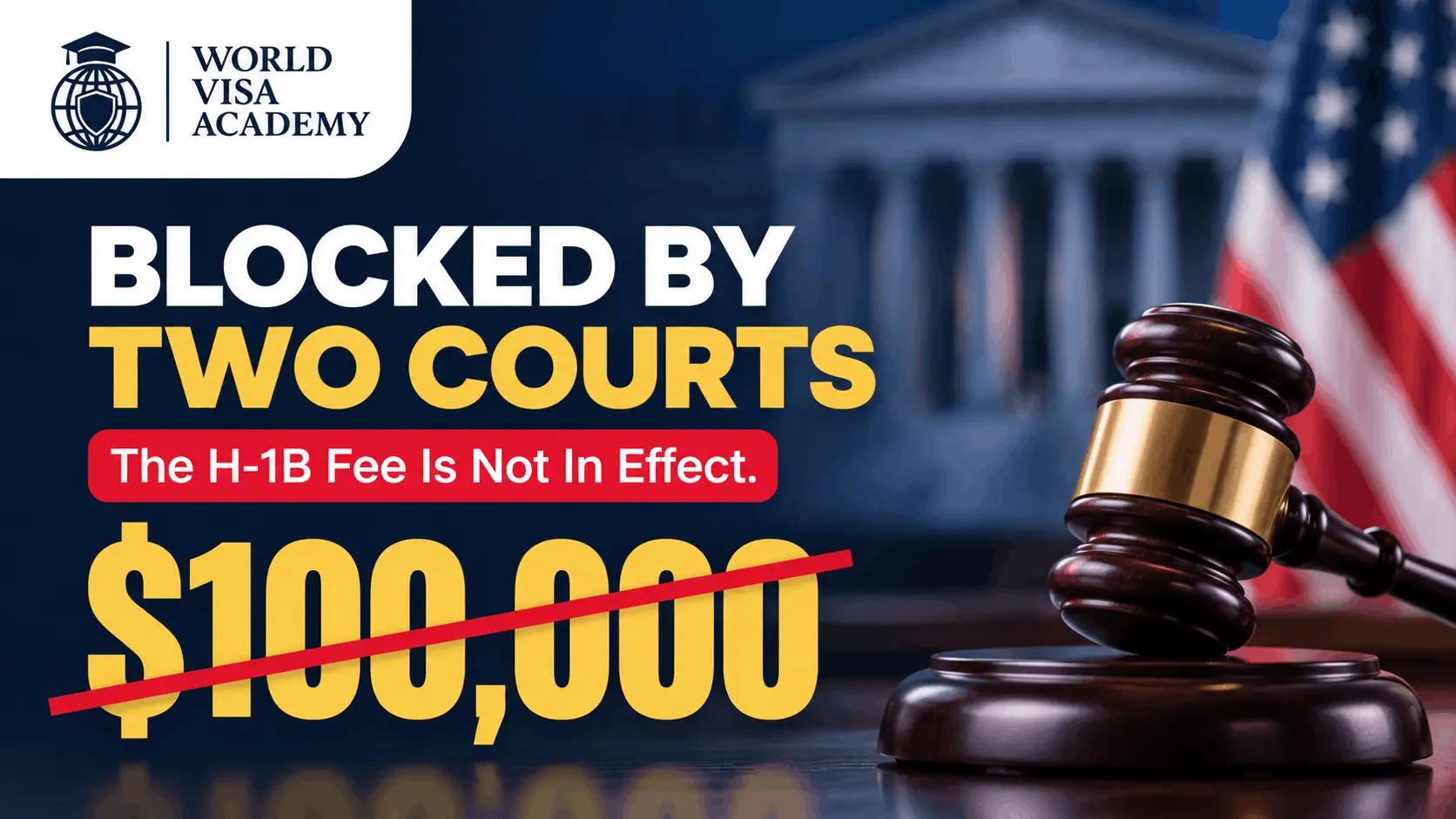

If you have been budgeting for a 100,000 dollar H-1B fee, or an employer has told you they cannot sponsor you because of it, the current legal position matters enormously.
As of early October 2026, the 100,000 dollar H-1B fee is not enforceable anywhere in the United States. Two separate federal courts have blocked it, and a federal appeals court has refused to reinstate it while the government appeals.
That could change. The litigation is unfinished and a Supreme Court appeal is expected. But any article telling you the fee is currently being collected is out of date.
The timeline matters because it explains why the position is unstable.
| Date | Development |
|---|---|
| September 2025 | Presidential Proclamation 10973 imposes a 100,000 dollar payment requirement on certain H-1B petitions |
| Earlier 2026 | A D.C. district court upholds the fee, finding it fell within presidential authority over non citizen entry |
| 8 June 2026 | The District of Massachusetts vacates the fee policy entirely, ruling it functions as an unauthorised tax and that its rollout violated the Administrative Procedure Act |
| 11 June 2026 | The administration files a notice of appeal to the First Circuit |
| 12 June 2026 | The district court grants a brief administrative stay, allowing collection to continue temporarily |
| 24 July 2026 | The First Circuit denies the government's stay request, finding it had not shown it was likely to succeed. The fee becomes unenforceable |
| September 2026 | The administration extends the proclamation for a further twelve months |
| 30 September 2026 | The Northern District of California grants a preliminary injunction in part, vacating the USCIS, DHS and State Department guidance implementing the fee |
The Massachusetts court's core finding was that the payment requirement functioned as a tax, which cannot be imposed without clear congressional authorisation, and that the implementation failed to follow proper rulemaking procedures.
The California ruling went at it from a different angle, vacating the agency policies themselves for failing to comply with notice and comment rulemaking requirements. Agencies are now prohibited from enforcing those policies while rulemaking and related analyses remain outstanding.
This is where most confusion sits, and it is worth understanding properly because the fee may return in some form.
USCIS clarified that the additional payment would apply primarily in three situations:
The beneficiary is outside the United States at the time the petition is filed.
The petition is filed with a request for consular processing or port of entry notification.
The beneficiary is deemed to have failed to maintain proper US immigration status while physically present in the United States.
In plain terms, it targets new entries from abroad rather than people already lawfully inside the country.
| Category | Exempt? | Why |
|---|---|---|
| F-1 student changing status to H-1B inside the US | Generally yes | Change of status, not consular processing |
| Existing H-1B holder extending or amending | Generally yes | Not a new entry from abroad |
| In country applicants maintaining valid status | Yes | Specifically noted as exempt |
| Renewals | Yes | Specifically noted as exempt |
| National interest cases | Yes | Discretionary exemption available |
| New hire outside the US requiring consular processing | Would be subject | Primary target of the proclamation |
For international graduates of US universities specifically, this distinction is the whole story. A graduate moving from F-1 to OPT to an employer sponsored H-1B without leaving the country generally sits outside the fee's intended scope even when it is in force.
If you are already studying in the US, the standard pathway from F-1 through OPT to a change of status H-1B was never the fee's primary target, and the fee is not enforceable at present regardless.
If you are applying from outside the US, you are in the category the proclamation was designed to affect. The fee is currently blocked, but the litigation is unresolved and the proclamation has been extended, so a reinstatement is possible.
If an employer has refused to sponsor you citing this fee, it is worth confirming the current position with them. Employers may be working from information that is several months out of date, and the Massachusetts ruling restored the H-1B programme to its pre proclamation cost structure based on existing statutory filing fees while it remains in effect.
If your employer already paid the fee, it is not yet clear how the rulings affect petitioners who have already paid. Some analysis has raised the possibility of refunds, but this remains unresolved.
Three separate challenges have produced different results, which is precisely why nothing here is settled.
| Court | Outcome | Current Status |
|---|---|---|
| District of Massachusetts | Vacated the fee entirely as an unlawful tax | Ruling in effect, on appeal to First Circuit |
| First Circuit Court of Appeals | Denied government stay request | Fee remains unenforceable during appeal |
| District of Columbia | Upheld the fee as within presidential authority | On appeal at the D.C. Circuit, oral argument heard March 2026 |
| Northern District of California | Granted preliminary injunction in part, vacated agency guidance | Agencies prohibited from enforcing implementing policies |
A Supreme Court appeal is expected. Reporting has also referenced a separate proposed fee at a different amount, which would be a distinct rulemaking rather than a continuation of the proclamation.
The 100,000 dollar fee was never designed to hit international graduates changing status inside the United States. It targeted new entries requiring consular processing.
Right now it hits nobody, because two federal courts have blocked it and an appeals court declined to revive it.
But the proclamation has been extended, three appeals are live, and a Supreme Court filing is expected. For anyone planning a US career over the next two years, the right posture is neither relief nor panic. It is checking the current position before every decision that depends on it.
World Visa Academy's US work visa training covers live regulatory and litigation developments, so you can advise clients on the current position rather than last quarter's headlines.
Explore WVA CoursesNo. The District of Massachusetts vacated the policy on 8 June 2026, and the First Circuit declined to reinstate it on 24 July 2026, finding the government had not shown it was likely to succeed on appeal. A second court, the Northern District of California, further vacated the implementing agency guidance on 30 September 2026. Employers are not currently required to submit the payment.
The Massachusetts court found the payment functioned as a tax rather than an immigration restriction, and that Congress had not clearly authorised the executive branch to impose it. It also found the implementation violated the Administrative Procedure Act. The California ruling focused on the agencies failing to follow notice and comment rulemaking requirements.
Generally no, even when the fee was in force. USCIS clarified that the payment applied primarily where the beneficiary was outside the United States at filing, where consular processing or port of entry notification was requested, or where the beneficiary had failed to maintain proper status. In country change of status applicants and renewals were noted as exempt.
Yes. The litigation is unresolved, the proclamation was extended for a further twelve months in September 2026, a separate D.C. case upheld the fee and is now on appeal, and a Supreme Court appeal is expected. Anyone planning around this should treat the current position as provisional rather than final.
This remains unresolved. Analysis following the Massachusetts ruling raised the possibility of refunds, and it is not yet clear how the rulings affect petitioners who have already paid. Employers in this position should seek advice from a licensed US immigration attorney rather than assuming either outcome.








0 Comments
Be the first to comment.