Best Overseas Job Visas for Sri Lankans in 2026 - Japan, Korea or Israel?
Sri Lanka's foreign employment sector is targeting 310,000 worker placements in 2026, and three destinations stand out for structured, government-backed opportunity.
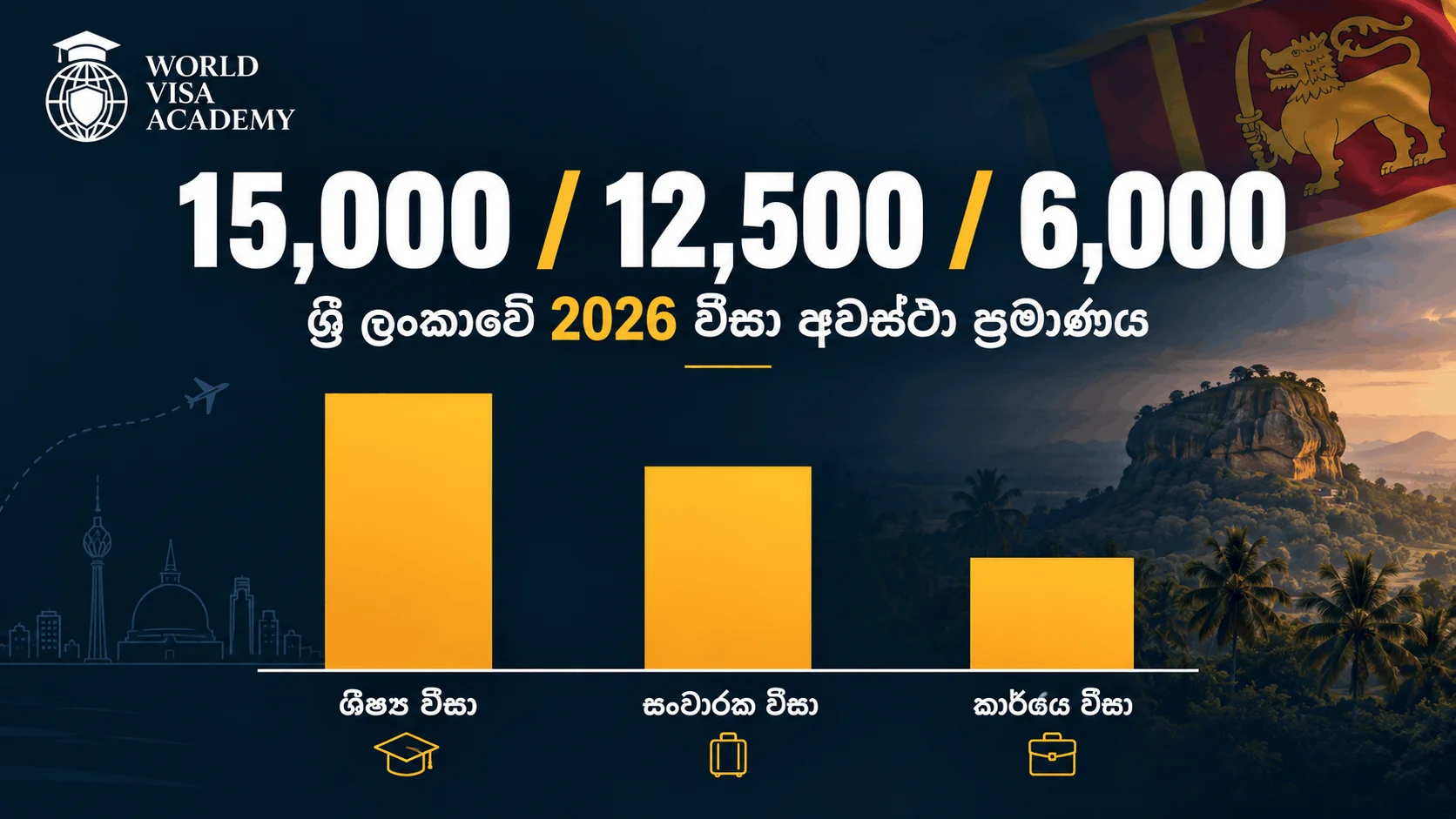
Under bilateral Memoranda of Understanding signed between governments, planned deployments for 2026 include Israel at 15,000, Japan at 12,500, and South Korea at 6,000.
These are government-to-government arrangements, which matters enormously. G2G channels mean regulated recruitment, verified employers and protection from the predatory sub-agents that have historically exploited Sri Lankan job seekers.
The sector is performing strongly, with cumulative official remittances reaching a historic US$4.6 billion and departures hitting a new peak by mid-2026.
At 15,000 planned placements, Israel represents the single largest G2G quota for 2026.
Structure: Recruitment of Sri Lankan temporary workers to the State of Israel operates as an established SLBFE programme.
Language requirement: Generally lower barrier than Japan or Korea.
Key consideration: Israel is among the 13 countries now requiring mandatory contract certification, covered below.
One practical note worth flagging: SLBFE has previously issued notices regarding Tel Aviv airport and Israeli airspace closures, reflecting regional volatility. The Foreign Employment Ministry has explicitly identified geopolitical tensions in West Asia as a risk factor its diversification strategy aims to insulate against.
Japan's 12,500 quota routes through two distinct programmes: TITP (Technical Intern Training Programme) and SSWP (Specified Skilled Worker Programme).
Language requirement: Japanese at N4 or N3 level. This is the highest language barrier of the three, but SLBFE is establishing heavily subsidised language centres island-wide offering intensive Japanese courses at exactly these levels to match visa requirements.
Why Japan matters long-term: SSW offers a genuine progression path, with Type 2 allowing indefinite renewal, family accompaniment and an eventual route to permanent residency. Japan already hosts roughly 73,000 Sri Lankans, one of the larger communities outside the Gulf.
Current activity: SLFEA is working with three Japanese companies, and signed an MOU with EUC Japan for ethical recruitment. A pilot project has 23 students training in Sapugaskanda under an agreement with a Japanese construction firm. Opportunities have also been announced specifically for Sri Lankan electricians.
At 6,000, Korea has the tightest quota of the three, making competition correspondingly sharper.
Language requirement: Korean language proficiency, with SLBFE subsidised centres offering courses.
Community: Around 20,000 Sri Lankans in South Korea, a smaller but established base.
Practical note: Korea is also on the mandatory contract certification list.
| Factor | Israel | Japan | South Korea |
|---|---|---|---|
| 2026 quota | 15,000 | 12,500 | 6,000 |
| Language required | Lower barrier | Japanese N4/N3 | Korean |
| Programme | SLBFE temporary worker scheme | TITP and SSWP | G2G employment scheme |
| Long-term residency path | Limited | Yes, via SSW Type 2 | Limited |
| Sri Lankan community | Established | ~73,000 | ~20,000 |
| Contract certification required | Yes | Not on the 13-country list | Yes |
| Regional stability consideration | Monitor closely | Stable | Stable |
This is the most important compliance update affecting Sri Lankan workers right now.
Since 1 July 2025, if you're heading to one of 13 specific countries for non-domestic work, your employment contract must be certified by the Sri Lankan diplomatic mission in your destination country before you can register with SLBFE.
The 13 countries: Saudi Arabia, Kuwait, Bahrain, Qatar, UAE, Oman, Israel, Jordan, Lebanon, Maldives, Malaysia, Singapore and South Korea.
These were selected because they host the largest numbers of Sri Lankan workers. The rule exists specifically to strengthen worker protection and combat human trafficking, ensuring your employment agreement is authentic before you commit.
Practical implication: if you're going to Israel or Korea, factor this certification step into your timeline. Japan is not currently on this list.
SLBFE is shifting from a regulatory body into what the ministry calls a proactive, high-value global talent exporter. Concrete changes include:
A fully integrated digital portal tracking departures, contracts and insurance, explicitly designed to bypass predatory local sub-agents.
Subsidised language centres island-wide offering intensive Japanese (N4/N3), Korean and German courses.
Aggressive labour diplomacy, shifting embassy labour attachés from passive problem-solvers to active market recruiters negotiating direct G2G quotas.
SLFEA recently announced a concession scheme with notable cost caps:
2,000 jobs in Dubai airport construction projects, maximum cost Rs. 150,000, all-inclusive.
800 supervisory positions, expenses capped at Rs. 180,000, all-inclusive.
Zero-cost employment at a UAE wellness centre for Sri Lankan degree holders, with all expenses covered by the organisation.
Those capped, all-inclusive figures are worth remembering as a benchmark. Any agent quoting dramatically more should be questioned.
SLBFE has issued warnings about foreign employment scams using social media platforms, a recurring problem targeting Sri Lankan job seekers.
Every Sri Lankan leaving for employment must register with SLBFE before departure under Section 53(3) of the SLBFE Act. This isn't optional paperwork, it's your legal protection and your access to welfare support if something goes wrong.
Choose Israel if you want the largest available quota and lower language barriers, while staying alert to regional developments.
Choose Japan if you're willing to invest 6 to 12 months in language training for genuinely the strongest long-term prospects, including eventual family accompaniment and permanent residency through SSW Type 2.
Choose Korea if you have Korean language ability or can acquire it, accepting that the 6,000 quota makes it the most competitive of the three.
The honest strategic view: Japan's language investment is real, but so is its payoff. Israel offers immediate scale. Korea sits between the two on both counts.
World Visa Academy's employment visa training covers G2G programmes, documentation standards and fraud prevention across major labour destinations.
Explore WVA CoursesUnder bilateral MoUs, planned deployments for 2026 are Israel at 15,000, Japan at 12,500 and South Korea at 6,000. These sit within SLBFE's broader target of 310,000 total foreign employment placements for the year.
Since 1 July 2025, workers heading to 13 specified countries for non-domestic work must have their employment contract certified by the Sri Lankan diplomatic mission in that country before registering with SLBFE. Israel and South Korea are both on this list; Japan is not. The rule exists to verify contract authenticity and combat human trafficking.
N4 or N3 level, depending on the programme. SLBFE is establishing heavily subsidised language centres island-wide offering intensive Japanese courses at exactly these levels, alongside Korean and German, specifically to match immediate visa requirements.
SLFEA's recent concession scheme provides useful benchmarks: Rs. 150,000 all-inclusive for Dubai airport construction roles and Rs. 180,000 all-inclusive for supervisory positions, with some UAE positions at zero cost. Any agent quoting substantially more than published capped rates warrants scrutiny.
Yes. Every Sri Lankan leaving for employment must register with SLBFE before departure under Section 53(3) of the SLBFE Act. Your passport must be valid for at least 6 months from the registration date. Registration provides legal protection and access to welfare support if problems arise abroad.








Would you like to read this article in Sinhala?
0 Comments
Be the first to comment.